Instant device data for instant decision making

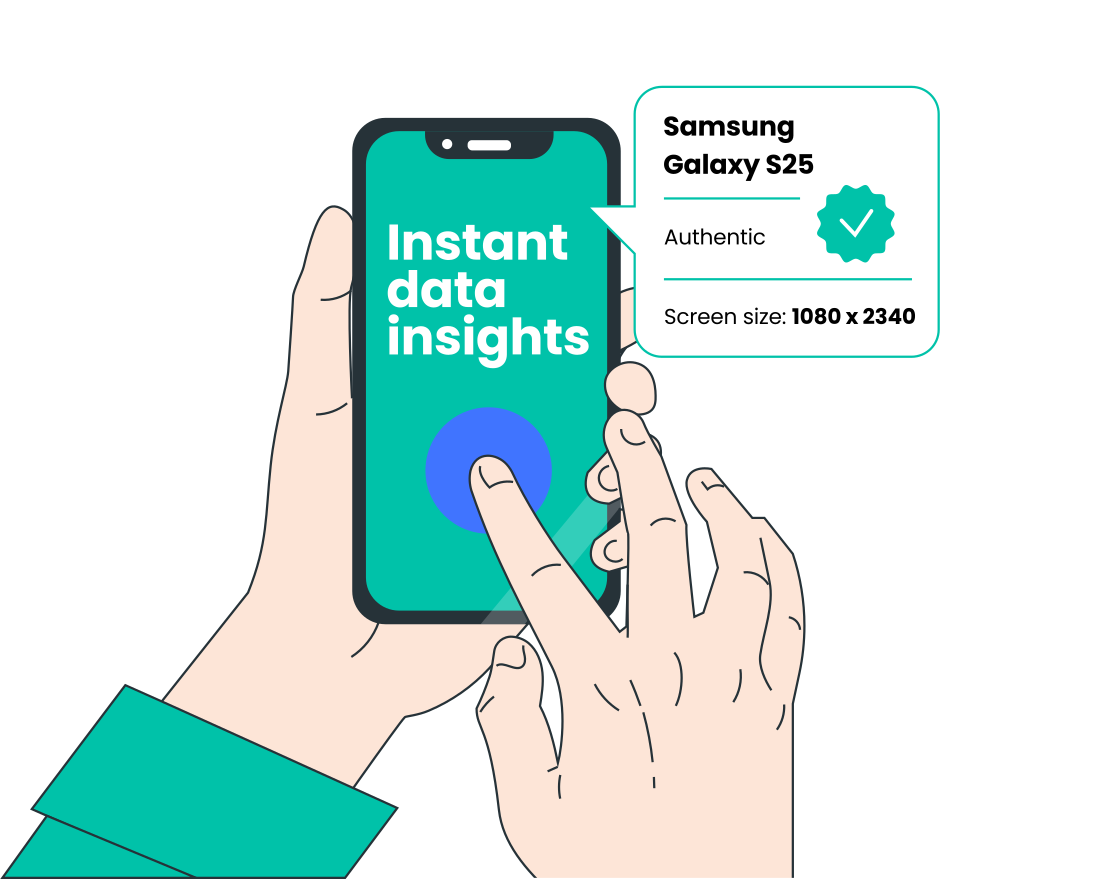
DeviceAtlas complements existing analytics stacks by identifying devices in sub-milliseconds. It adds a powerful device intelligence layer that provides consistent device data in real time.

Our immediate device data across web, app, and AI systems enables decision making in-session, optimizes experiences across devices, and supports clean experiments. With DeviceAtlas’ standardized device signals at the point of ingestion, organizations can make confident monetization decisions—at scale.

Device intelligence trusted by global leaders

The need for instant device intelligence 

Downstream device intelligence provides great aggregate insights. To action these insights in real time, adding a device intelligence layer to your analytics stack is essential.

Fast platform reactions

Immediate editorial and product reactions can help capture in-session revenue opportunities.

Engineering efficiency

Complete data signals let engineering teams spend time building new features instead of fixing data issues.
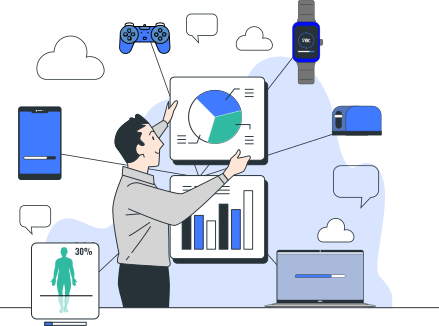
Effective personalization

Classifying devices precisely sharpens customer personalization and delivers well-timed, relevant content across devices.

Consistent cross-device experience

Accurate device insight helps organizations to deliver seamless journeys on every device.

Clean insights

Aligned metrics across teams make experiments easier to trust and strengthen performance reporting.
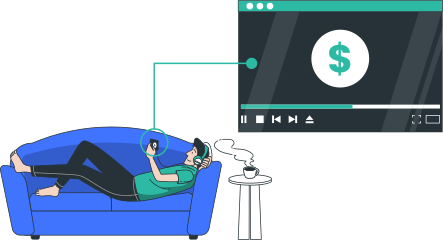
Monetization opportunities

Deep device visibility reduces wasted ad spend, and saves on engineering resources and maintenance costs.

Why companies use DeviceAtlas

DeviceAtlas provides high-precision, ultra-fast device data — the millisecond it’s needed.

Instant device identification


DeviceAtlas ensures that platform context is available the moment a request is logged. Our real-time, consistent classification enables smart business decisions in analytics, advertising and more.

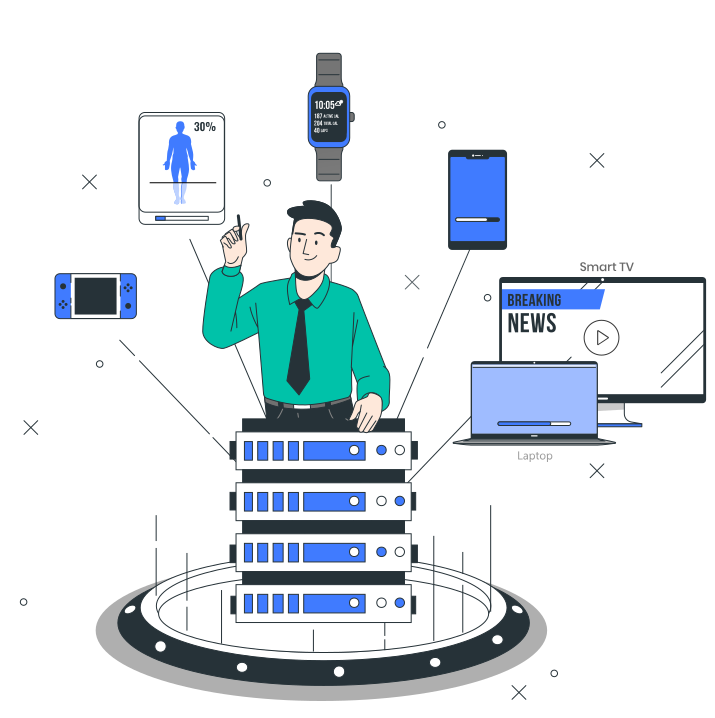
Consistent classification


We provide standardized device signals at the point of ingestion, ensuring every system across your stack, from experimentation to AI and advertising, works from the same device context.

Strong input signals


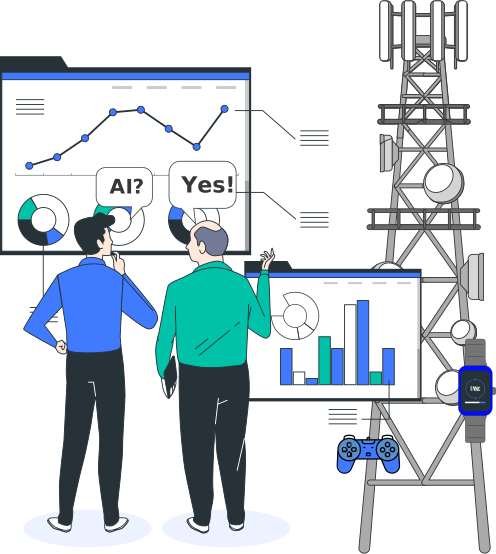
Instant device intelligence provides the input signals necessary to support AI growth and performance. DeviceAtlas’ complete device data helps AI systems optimize with greater precision for AI decisioning.

Clean device segmentation


DeviceAtlas’ consistent segmentation across desktop, mobile, app, and online video means cleaner experiments. Clean segmentation before data enters testing platforms creates accurate data for important decisions.

How DeviceAtlas works


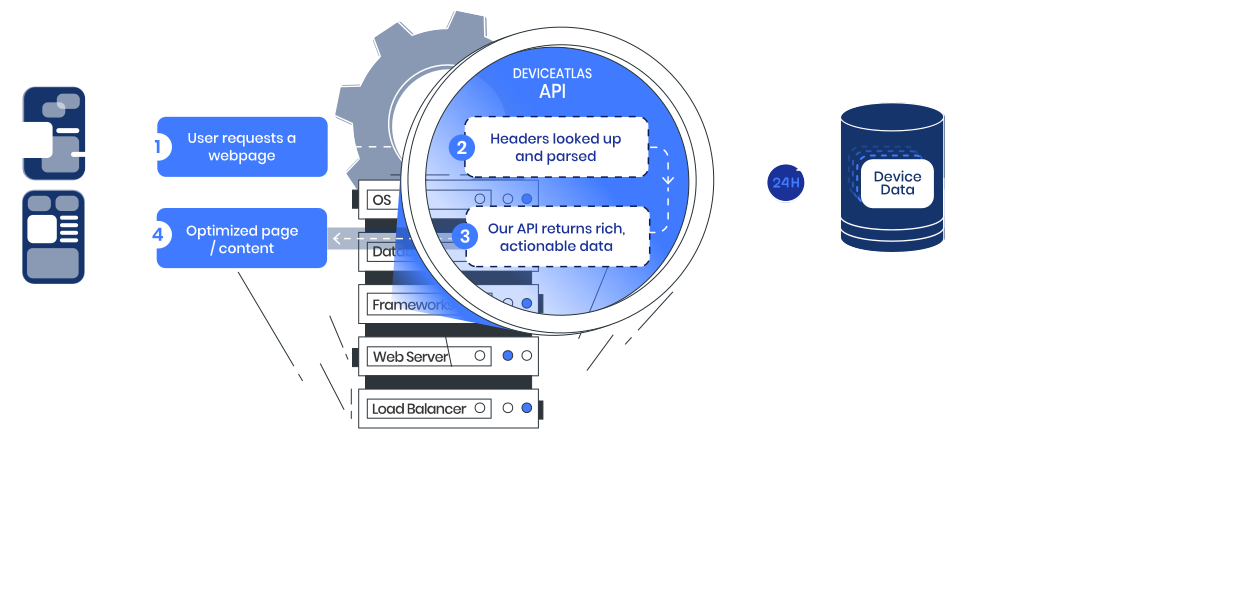
DeviceAtlas for web is a locally deployed, high performance solution that you embed in your server stack to convert HTTP headers into rich, actionable data.
Enrich your device analytics

Submit your details to set up a quick call. We'll discuss;

  1. Your specific needs and use case.
  2. Our service and data properties.
  3. An enterprise evaluation and next steps.

Fields marked with an asterisk (*) are required

Device Detection

6 Things to Consider When Choosing a Commercial Device Intelligence Solution

Finding a reliable, accurate device intelligence solution is vital for businesses operating at scale....

Aisling Arundel - 30 Mar 2026
9 min read

Home  /  Products  /  DeviceAssure  /  How it Works

How DeviceAssure Works

Stronger fraud prevention starts with deeper device insight

Understand device integrity through real-time classification and risk insights without PII data or user tracking.

DeviceAssure

How it Works

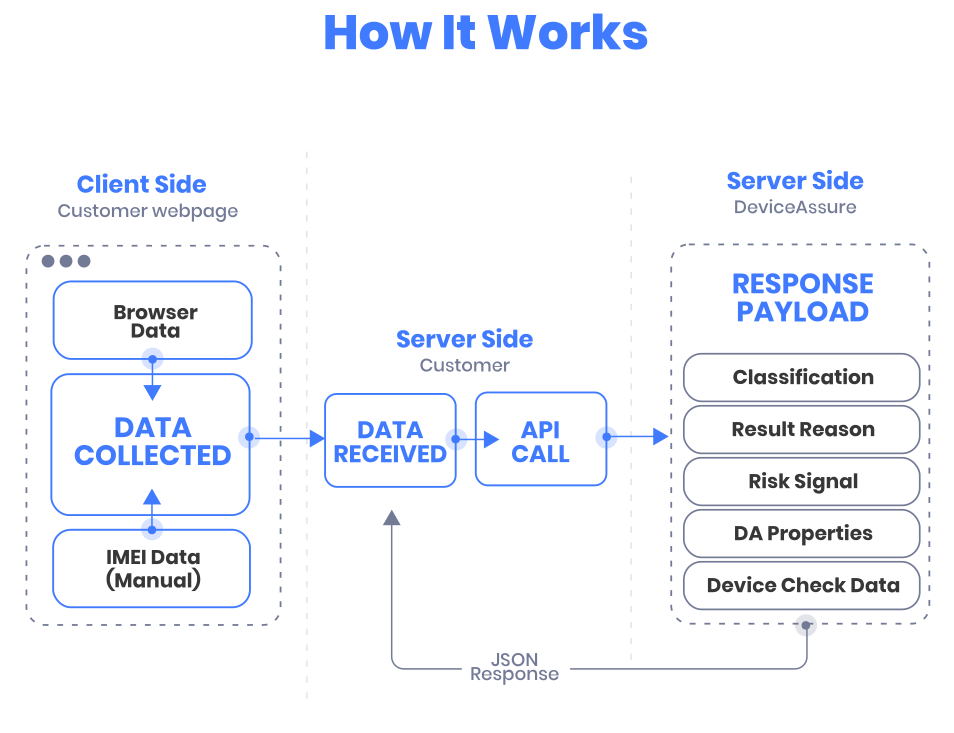
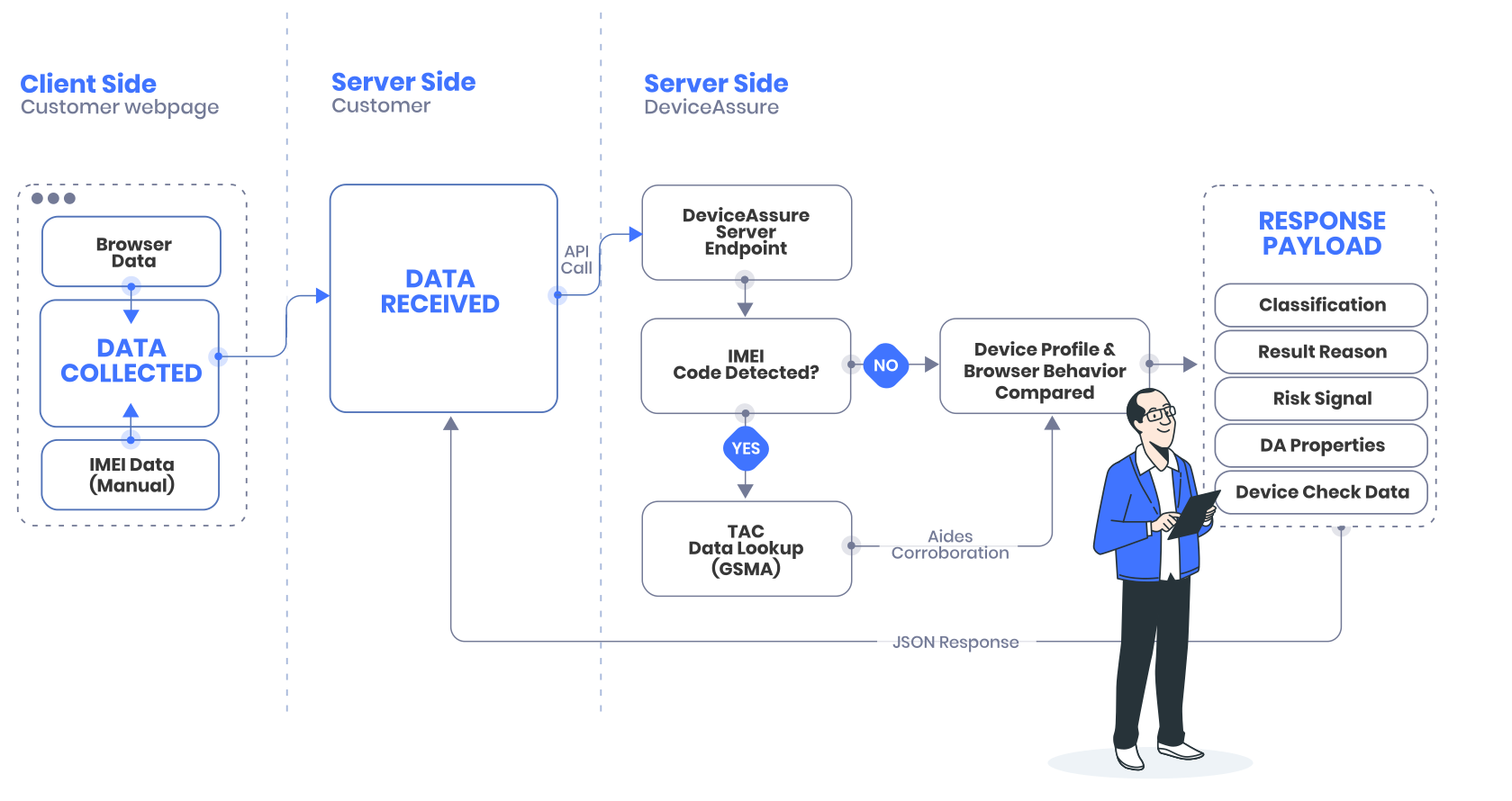
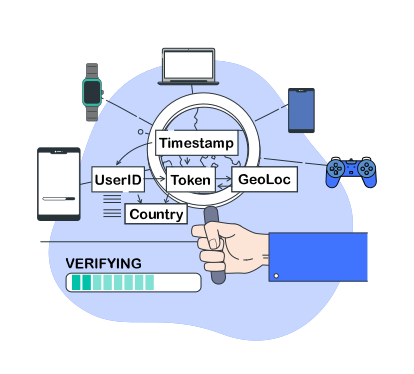
DeviceAssure collects device-level identifiers and telemetry directly from the end-user’s device using a lightweight client-side library or SDK. These signals are securely transmitted to the DeviceAssure service, where they are analysed to verify device authenticity and detect inconsistencies or spoofing. The verification result is then returned either to the calling application in real time or to the customer’s backend, depending on the integration approach.

How DeviceAssure works

Integration Options

DeviceAssure offers flexible integration options to suit different architectural and operational requirements. Customers can choose between a server-to-server approach, which provides enhanced security, control, and scalability within backend systems, or a client-to-server model, which enables real-time, in-session decisioning directly within the user experience. Each option is designed to deliver reliable device verification while aligning with existing infrastructure, performance needs, and security considerations.

Option 1
  1. Secure: request can be bundled with existing calls back to the host service, to protect from tampering by bad actors on the device.
  2. Discreet: client sees no unexpected calls to third parties.
  3. Transparent: DeviceAssure customer has full visibility into the content of request and response, can verify no PII etc.
  4. Scalable: built for high-volume processing and data storage/analysis.
  5. Simple integration: Enables straightforward integration with fraud systems, risk engines, data warehouses, SIEM tools, or case management workflows.
Option 2
  1. Responsive: Real-time device verification and intelligence data returned to the page/app for action triggering, e.g. UX element triggering, access approval/denial, 2FA triggering, branch-point determinations for alternate user flows.
  2. Cost-effective: No infrastructure maintenance dependencies.
  3. Rapid integration: A simple API call returns the authentication result and device intelligence data directly to webpage/app.
  4. Lightweight and performant: Negligible impact on site/app performance.

Classifications & Results

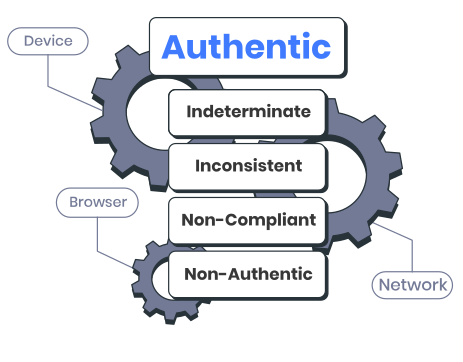
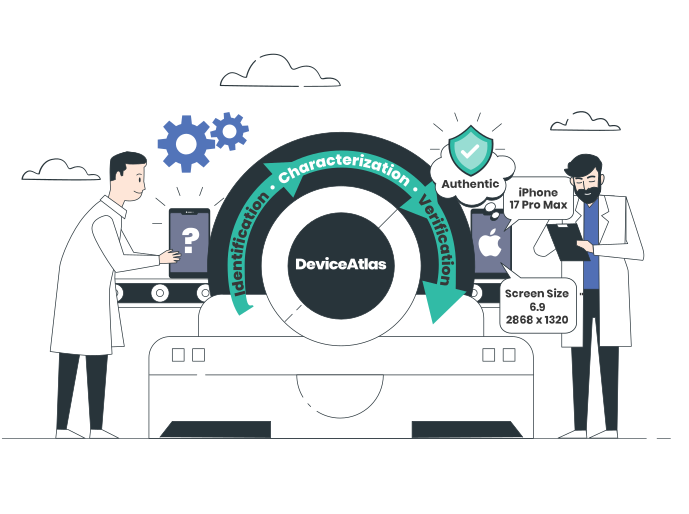
Using device identifiers and property analysis (device, browser, network), DeviceAssure assesses the authenticity of a device and responds (from the API request) back to the customer.

The verification result returned by DeviceAssure is structured hierarchically. At the top level, devices are classified into broad categories that reflect their authenticity status, enabling both high-level decisions (e.g. yes/no, trusted/untrusted) and more detailed assessments where needed.

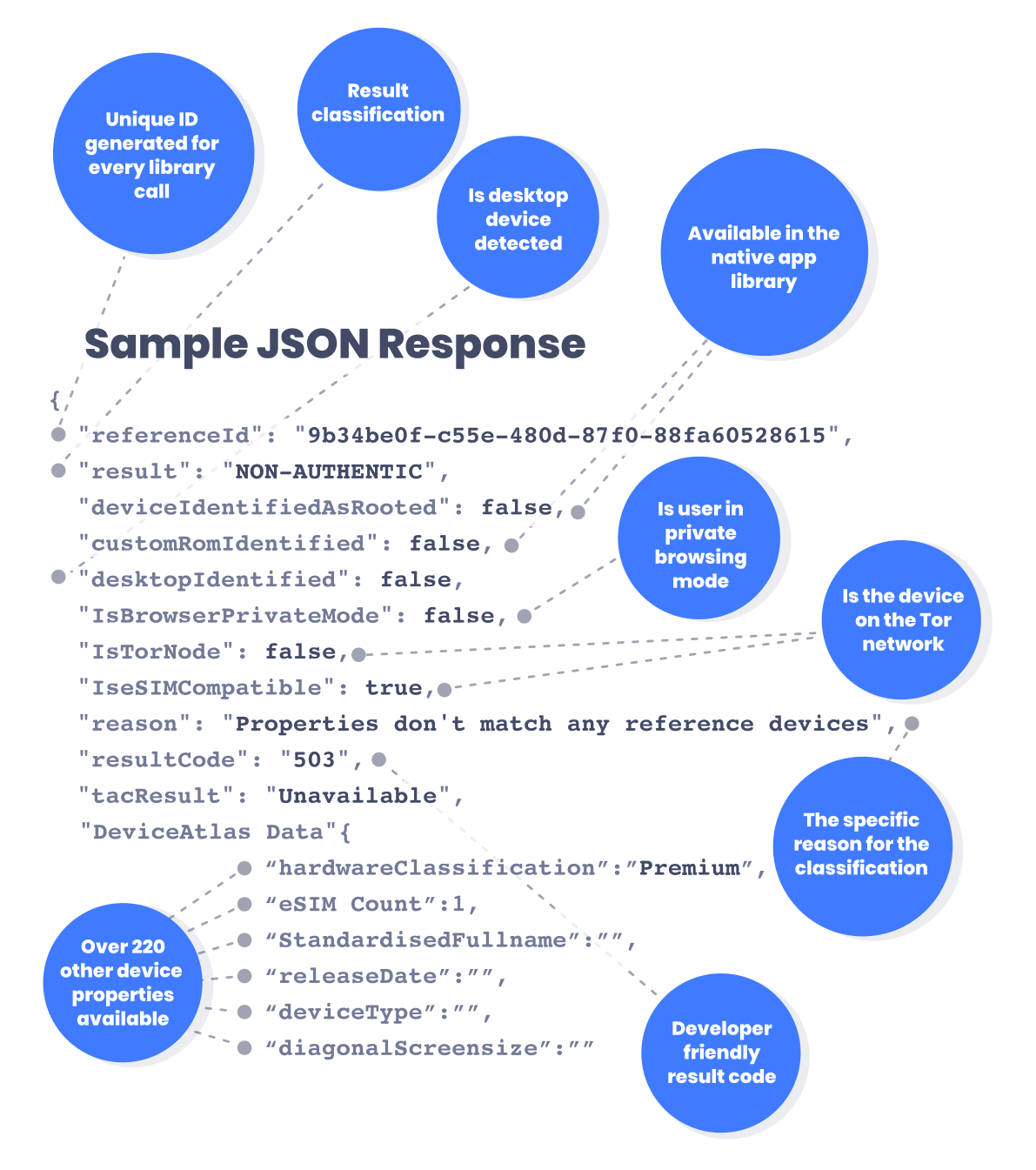
For devices not deemed authentic, customers access a clear explanation of the classification, including a specific reason and the associated result reason code. This enables real-time action or in-depth offline analysis, depending on operational requirements.

Classification Table

Outcome Technical Definition Business Impact Recommended Action
Authentic Identifiers* are consistent and measured properties that match a valid variant of the identified device.
Response Code: 101
The device is genuine. Safe to transact with full confidence — low fraud risk. Verify real user device, approve transactions, onboard user, or allow full service access without extra verification.
Indeterminate Unable to match identifiers to any known device. Possible reasons: masking proxy, missing data, unsupported OS, browser limitations, incomplete profiling.
Response Codes: 201–211
The device can’t be verified. It could be legitimate new hardware or an attempt to hide identity. Apply step-up verification (e.g., OTP, KYC). Monitor behavior and flag repeated failures for review.
Inconsistent Identifiers point to different devices, but at least one matches measured properties.
Response Codes: 301–304
Potential tampering or spoofing — some identifiers match, others don’t. Pause high-value transactions. Investigate device history. Consider re-authentication or manual review.
Non-Compliant TAC** is invalid and not recognized by the GSMA global TAC list.
Response Code: 401
High probability of counterfeit or unregistered hardware. Block transaction or account creation. Escalate to compliance/fraud prevention teams.
Non-Authentic Device claims to be a specific model, but device properties don’t match. Includes blacklisted devices, emulators, mismatched headers, and spoofing.
Response Codes: 501–508
Known fraud pattern detected. Very high risk. Immediately block activity. Add to fraud intelligence list. Notify relevant teams for investigation.
i

* Identifiers - Device identifiers are key pieces of technical information that reveal what a device actually is when it connects to a service.

** TAC - A TAC (Type Allocation Code) is the first eight digits of a device’s IMEI number. TACs are issued by the GSMA and tell you the make, model, and manufacturer of a mobile device. In DeviceAssure, the TAC is used to check whether a device is genuine and matches its claimed identity — if the TAC is invalid or doesn’t align with the device’s properties, it can signify counterfeit or tampered hardware.

Bot Detection

DeviceAssure detects and identifies two major bot categories; declared bots (identify themselves as genuine bot traffic — Response Code 601) and undeclared bots (mask their automated nature — Response Code 602).

Outcome Technical Definition Business Impact Recommended Action
Bot
(JS client only)
Automated traffic from bots.
Response Code: 601
Traffic that identifies itself as bot traffic — it is not trying to appear as a device, e.g. search engine crawler, AI bot. Allow through per customer policy.
Bot
(JS client only)
Automated traffic from bots, emulators, or server hardware.
Response Code: 602
Likely fake signups, scraping, click fraud or abuse attempts. Block or challenge (CAPTCHA, behavioral challenge). Track bot activity patterns for future prevention.

Risk Signals

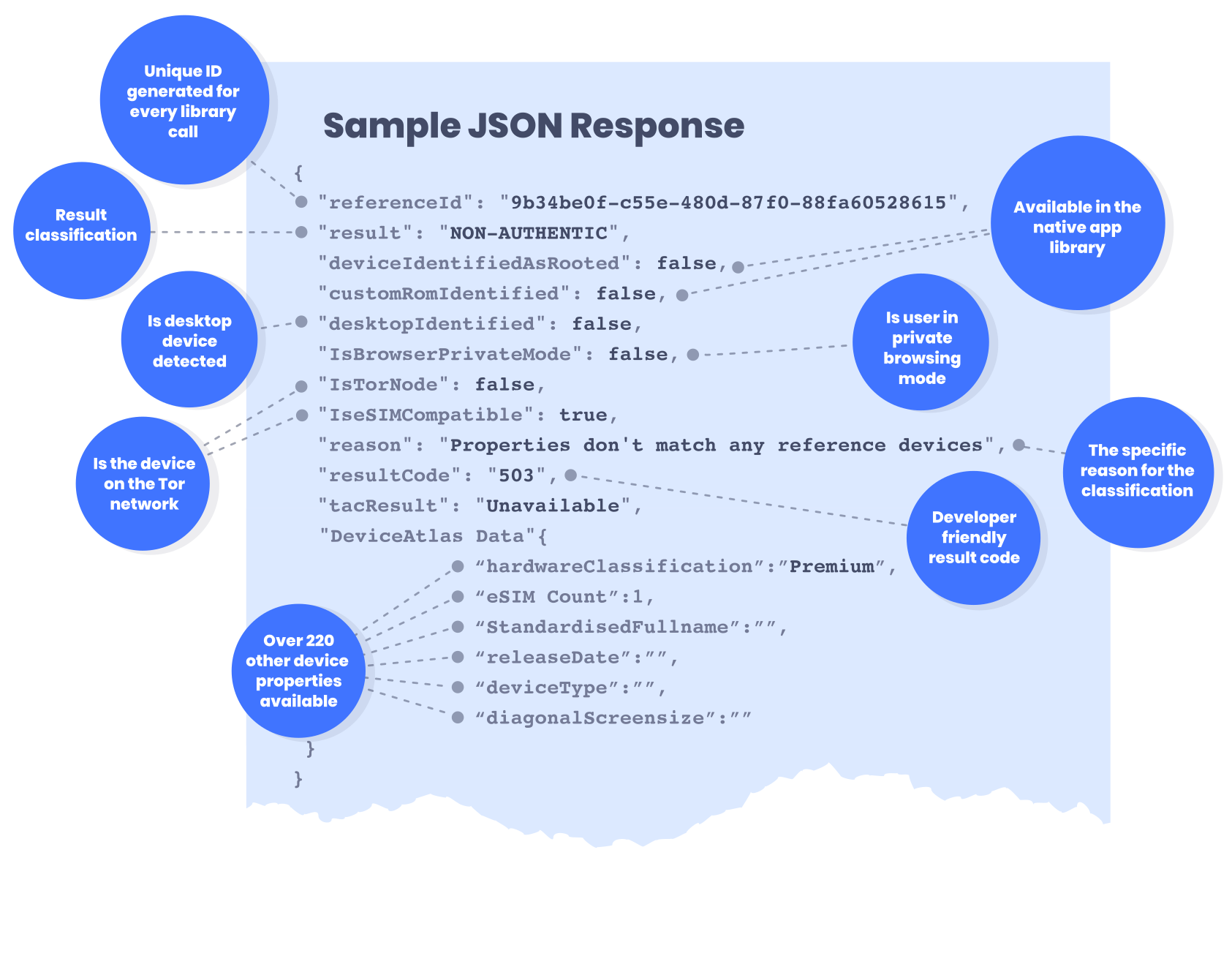
DeviceAssure provides a diverse array of key risk data points. These context relevant signals complement the DeviceAssure authentication classification of the device and are used to drive decisions for specific customer use cases, e.g. policies restricting access for users using the TOR network.

Outcome Technical Definition Business Impact Recommended Action
deviceIdentifiedAsRooted
(Android SDK only)
A flag that indicates whether the device is running a Custom ROM or not. The device's software has been modified. High-risk device. Immediately block activity. Add to fraud intelligence list. Notify relevant teams for investigation.
customRomIdentified
(Android SDK only)
TAC is invalid and not recognized by the GSMA global TAC list.
Response Code: 401
Device software has been modified. High-risk device. Immediately block activity. Add to fraud intelligence list. Notify relevant teams for investigation.
desktopIdentified A flag that indicates whether the device has been identified as a desktop or not. The device has been identified as a desktop. Low risk. Take appropriate actions depending on the use case in question.
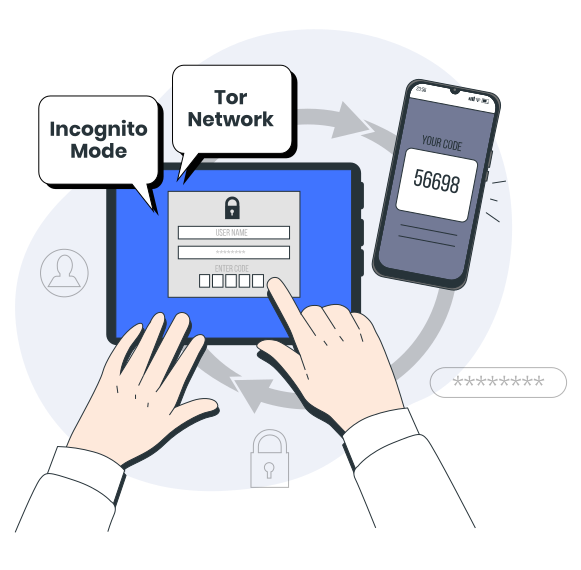
privateBrowsing A flag that indicates whether the browser is in private mode, e.g. Incognito mode in Chrome. The mobile device has been identified with a browser in private mode. Low risk. Take appropriate actions depending on the use case in question.
torNodeIdentified A flag that indicates whether the device is accessing the resource through the TOR network. The device’s IP is an exit node on the TOR network. Risk is use case and policy dependent. Take appropriate actions depending on the use case in question, e.g. 2FA initiated.

Key Features

Advanced Verification & Identification

DeviceAssure’s advanced verification and identification technology authenticates devices in real time to confirm their true make, model, and authenticity.

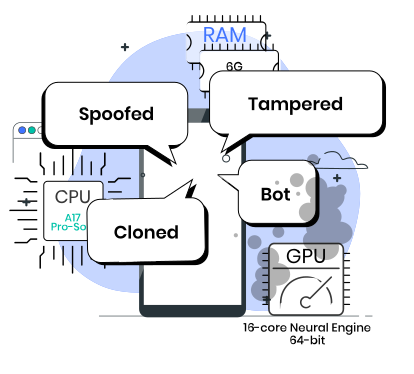
By analyzing unique device attributes beyond basic identifiers, it detects anomalies and patterns indicative of bots and spoofed, tampered, or cloned devices with unmatched accuracy. This gives customers visibility of genuine, trusted devices versus non-authentic and risky devices — improving protection of your ecosystem from fraud, risk, and compromised endpoints.

Custom Tags

Customers can associate their own IDs/data to requests to DeviceAssure. These datapoints are not stored and are passed back in the authenticity response. This allows customers to link their own data points to the authenticity of the device.

DeviceAssure is designed to be used in reseller platforms, white-label environments and B2C enterprises. Custom tags enable linking a downstream channel partner to the verification response.

Category Example Fields Purpose
Partner /
Account Identifiers
Partner ID /
Account Number /
User ID
To tie DeviceAssure results to a specific partner, reseller customer or account without exposing personal data.
Session /
Transaction Info
Session ID /
Transaction ID
Helps you trace when and where the device verification occurred.

QR Code

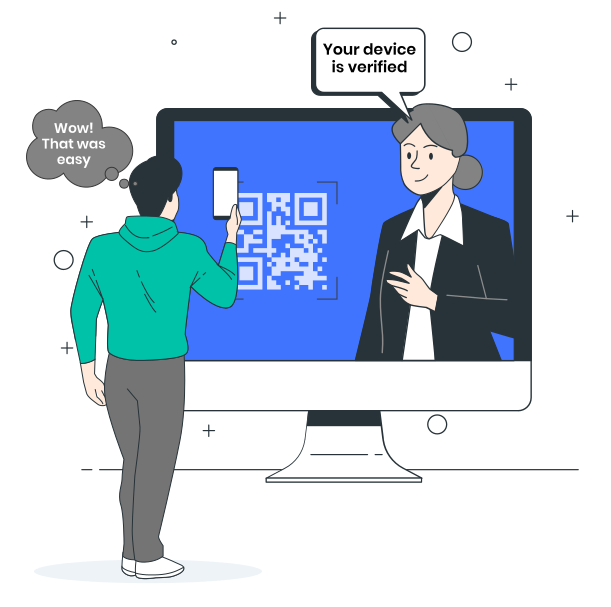
DeviceAssure’s QR Code Verification makes device authentication for desktop users simple and secure. By scanning a unique QR code, users instantly trigger a real-time check that confirms the authenticity and integrity of their mobile device. This fast, user-friendly process identifies and verifies the authenticity of the scanning mobile device and makes this data available without the user having to leave their desktop session. By bringing the mobile device into the customer's process, it also verifies that the mobile device exists, is in the user’s possession and is functional.

Risk Signals

DeviceAssure returns several signals that are contextually relevant to some customer use cases. Risk signals do not impact the overall result classification as they are not inherently signals of fraud. However, they can indicate an increase in risk for some customers, e.g. customers that have a zero tolerance policy on user access may consider Incognito mode coupled with the device exiting off the Tor network to be risky enough to initiate their 2-factor authentication process.

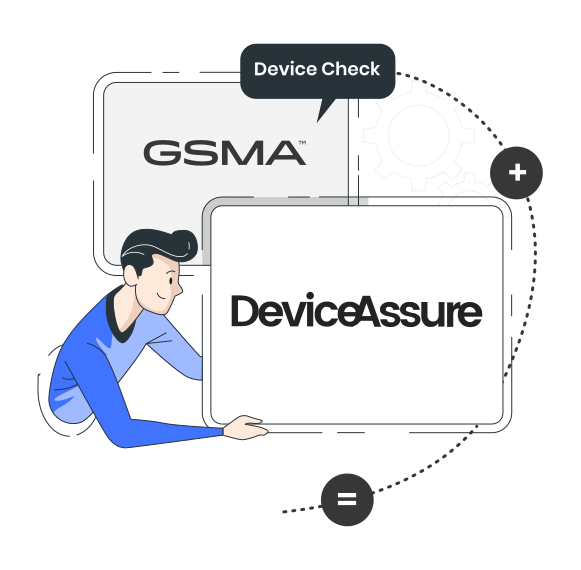
GSMA Device Check

GSMA Device Check provides authoritative network data on a device’s IMEI, including its history, blocklist status (e.g. lost or stolen), and operator-reported legitimacy. However, stolen devices can sometimes be “laundered” through IMEI alteration or cloning, enabling them to pass IMEI lookups if the new identifier appears clean.

DeviceAssure mitigates this risk by verifying the live authenticity and integrity of the physical device in real time, detecting hardware and firmware inconsistencies that indicate tampering or spoofing — ensuring that even if an IMEI appears legitimate in GSMA data, a compromised device will fail verification.

Device Characterization Data

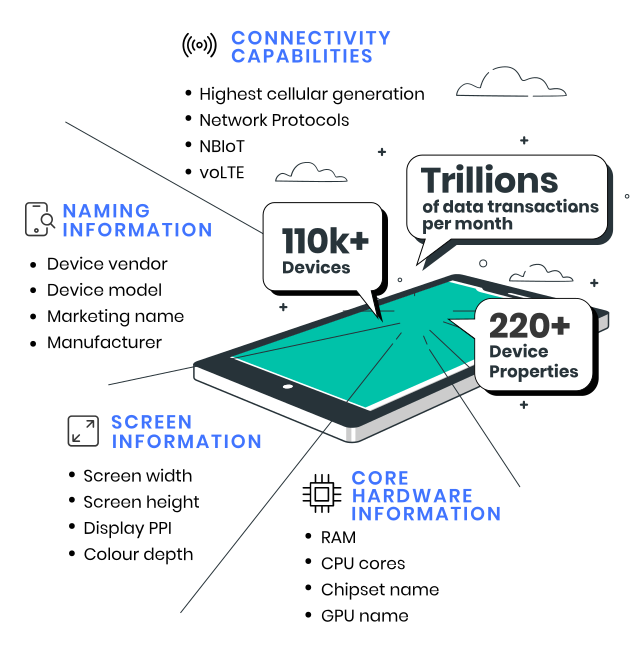
DeviceAtlas Ltd. analyzes and collects over 220 device properties for over 100,000 SIM-enabled devices. DeviceAssure has access to this large data store and can return those properties that are of interest to the customer in its result response. For more information on the device properties available, please click here.

eSIM Compatibility

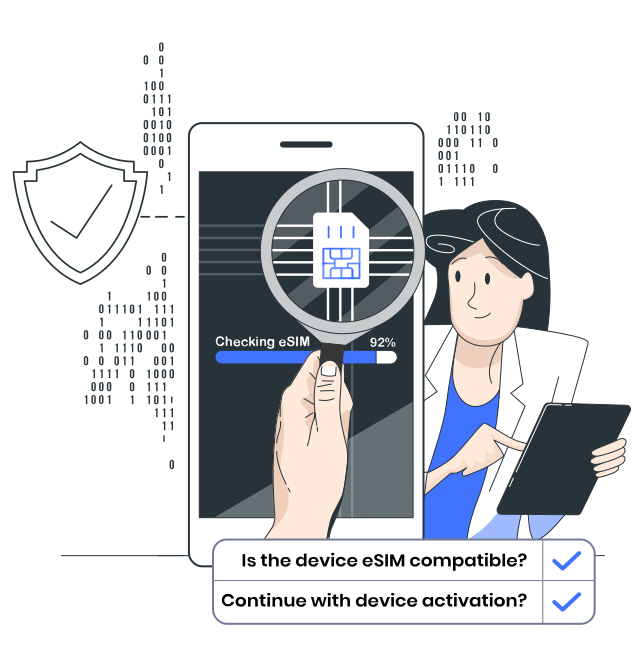
DeviceAssure addresses this challenge head-on by providing an eSIM compatibility flag for every device it verifies. This allows providers to instantly distinguish between devices that support eSIM and those that do not, before attempting provisioning. Customers are guided down the right path from the start, and failed activations are dramatically reduced.

DeviceAssure Web Evaluation

Click the button below to get started.

Start understanding your device traffic today

Contact us now to set up a quick discovery call. We'll discuss:

  1. Your specific needs and business use case
  2. A technical overview of our services and the data properties we provide
  3. How to set up an enterprise evaluation for your team & the next steps to follow

Fields marked with an asterisk (*) are required

  NAB, April 18-22, Las Vegas

The Market Leader in Device Identification Since 2005

We give you instant certainty about connected devices, so you can improve experiences, targeting, monetization, and analytics across fragmented CTV, mobile, app, and web environments.

Trusted by

Some Topics We Can Discuss at NAB

  1. Reducing playback issues by identifying device capabilities more accurately.
  2. Enriching ad requests and delivery workflows with more accurate device data.
  3. Improving CTV monetization by classifying devices more reliably.
  4. Reducing reporting discrepancies across analytics and traffic-quality workflows with precise device identification trusted by global Media and Adtech companies.

What You Will Gain

  1. Identify where device fragmentation may be creating blind spots in your stack.
  2. Consider new approaches to streaming, monetization, and measurement challenges across fragmented environments.
  3. Explore ways to improve device detection without adding engineering overhead.
  4. Leave with concrete ideas relevant to your roadmap, integrations, and operational goals.

Meet the team

Here’s who you will meet
from DeviceAtlas

Sebastian Ryan

Technical Partnerships Manager

Jerry Kroboth

Director of Business Development

Will you be there?

If so, we would love to chat

Device Landscape

2G and 3G Sunsets: The Hidden Risk for IoT Devices

Global operators are shutting down 2G and 3G networks to release spectrum to facilitate 5G rollout. Device...

Aisling Arundel - 26 Feb 2026
5 min read

Speed Sells: The Ecommerce Guide to Faster Web Performance

Slow pages lose sales. This free guide explains how reducing web page weight improves product performance, mobile shopping, and checkout conversions—without compromising design.

Download Form

Fields marked with an asterisk (*) are required

Why Web Performance Matters for eCommerce

Heavy pages increase bounce rates, damage mobile experiences, and slow down checkout. They also weaken SEO and reduce the return on paid advertising. For eCommerce businesses, page weight directly impacts revenue, customer experience, and market reach.

What You'll Learn

  1. What web page weight is and why it keeps increasing
  2. How it affects user experience, mobile loading, SEO, and global reach
  3. How to measure it accurately
  4. How to reduce it using proven optimization methods

What You’ll Be Able To Do

  1. Speed up product and category pages
  2. Improve mobile shopping performance
  3. Reduce checkout abandonment
  4. Strengthen eCommerce SEO and paid traffic results

Make your eCommerce site faster, lighter, and easier to buy from.

Device Landscape

Leveraging Device Intelligence for Video Monetization

Billions of people stream content daily. Explore how video monetization models can use accurate, instant...

Aisling Arundel - 27 Jan 2026
5 min read
Device Detection

Why CTV Apps Should Use Device Intelligence to Identify Devices

Many CTV publishers rely on costly, high-maintenance TV API integrations to identify consumer devices....

John A Leonard - 21 Jan 2026
4 min read
DeviceAtlas
  CES, January 6-9, Las Vegas

Grow CTV ad revenue with accurate device intelligence.

Meet DeviceAtlas at CES 2026 to learn how accurate device signal improves QoE, unlocks Smart TV and STB insights, and protects premium CTV inventory.

Book your CES meeting

Book a short meeting with our team during CES to explore how accurate device intelligence can boost streaming performance and revenue.

What you'll gain

Better QoE across connected devices

Smart TV & STB performance insights

Stronger monetization of premium CTV

Who it's for

FAST, AVOD, SVOD, and content delivery platforms.

Sebastian Ryan

Technical Partnerships Manager

Jerry Kroboth

Director of Business Development

DeviceAtlas
  CES, January 6-9, Las Vegas

Sharpen targeting, improve performance measurement, and boost CPMs.

Meet DeviceAtlas at CES 2026. We empower AdTech leaders with accurate data on each viewer’s device capabilities to eliminate delivery mismatches, wasted spend, and reporting gaps.

Book your CES meeting

Secure 20 minutes with our team to see how real-time device intelligence can improve performance across your stack.

What you'll gain

Personalised demo focused on your specific needs.

Unbiased guidance on using device intelligence to boost performance.

Real-world case studies showing the gains companies like yours are achieving.

Who it's for

FAST, AVOD, SVOD, and content delivery platforms.

Sebastian Ryan

Technical Partnerships Manager

Jerry Kroboth

Director of Business Development