


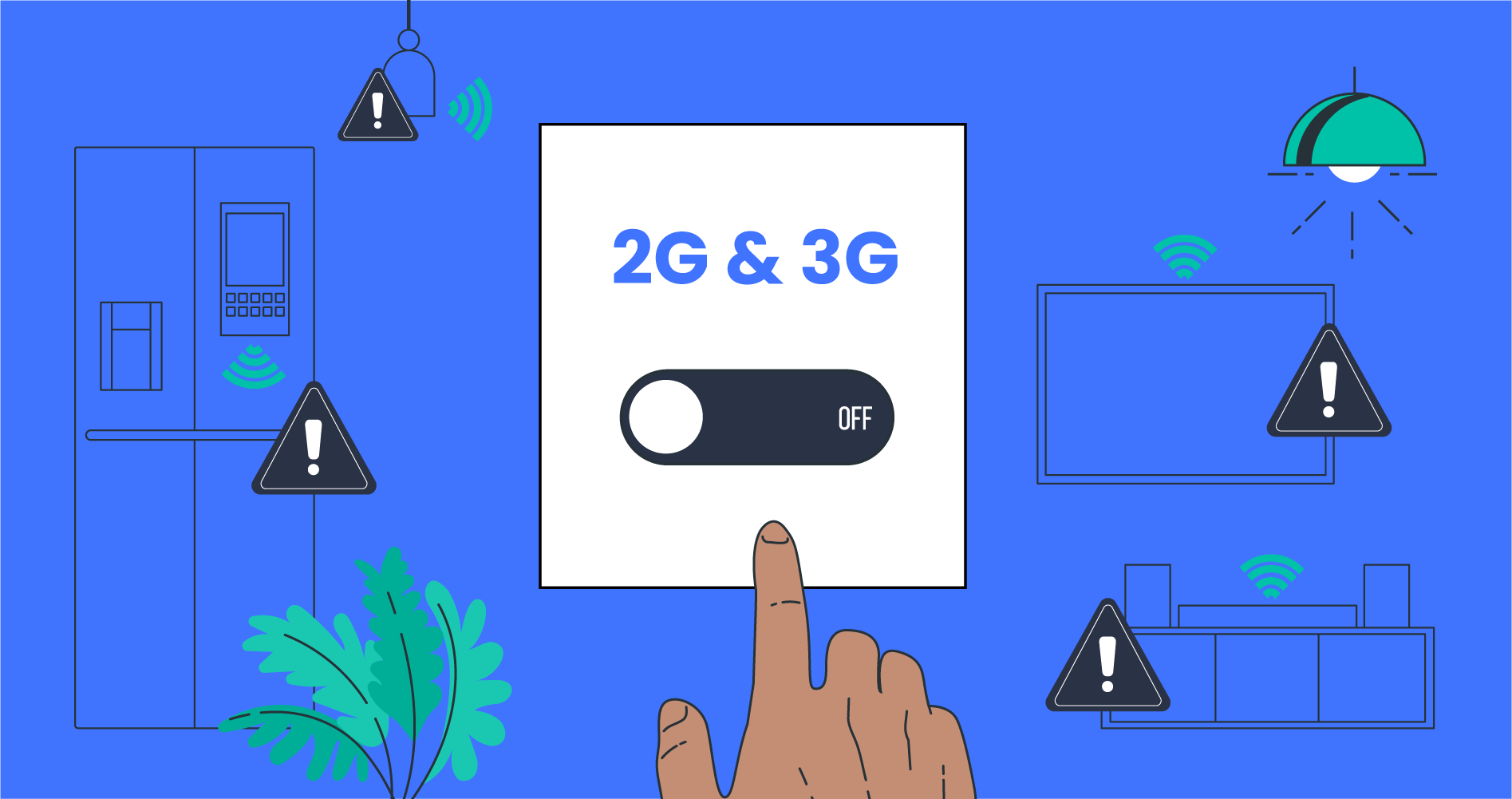
2G and 3G capabilities are being phased out across the globe as we speak. 2G, which was first launched in the early 1990s, is taking up bandwidth that could be more efficiently utilized by newer technologies such as 4G and 5G. As 2G and 3G networks are being switched off in many territories, operators must ensure that services for subscribers remain uninterrupted. Many countries recognize the importance of this issue and have regulatory obligations in place. For example, Ireland’s guidelines request that operators provide network capacity on the remaining 2G and 3G networks so devices that can only access those networks are still supported.
However, if Mobile Network Operators (MNOs) are unaware of their devices’ network capabilities, they can’t predict which devices will stop working due to the 2G or 3G shutdown. Naturally, this can be extremely frustrating for customers, damaging for brand reputation and even quite frankly; dangerous.
Additionally, with the proliferation of IoT (Internet of Things) devices, a significant number of them are on mobile networks too, e.g. vehicles, vending machines, alarms, TVs, parking meters, security cameras, and even smart bins. However, MNOs are typically accustomed to dealing with phones only and may be less aware of other devices connecting to their networks. This is why a device intelligence solution is essential to help operators identify which devices are reliant on network bands in danger of being shut off.
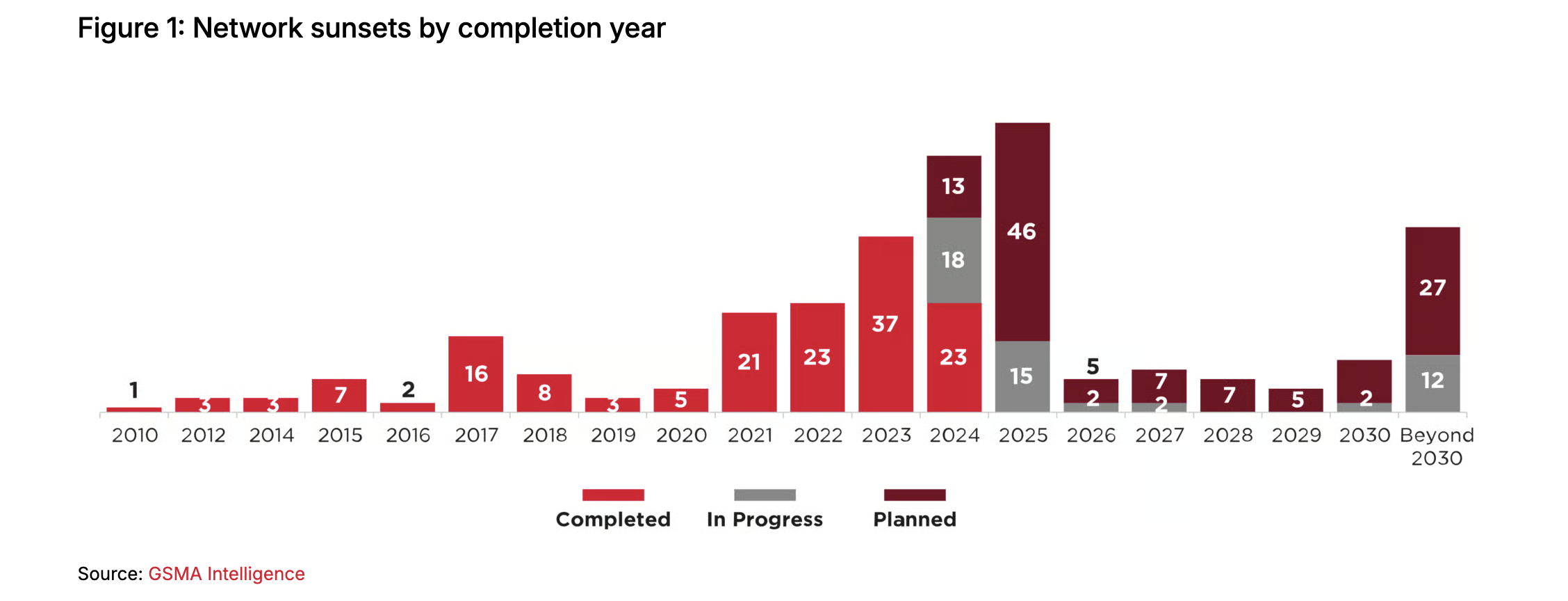
According to GSMA data, many MNOs have already sunset 2G and 3G.
The Impact of 2G/3G Sunsetting on IoT
As stated above, the shift to newer networks like 5G affects more devices than just phones. The IoT devices reliant on 2G or 3G function much like simplified phones: they have SIM cards, connect to cellular networks, and transmit data back to manufacturers or operators. As cellular connectivity has become cheaper and more widely adopted, the number of IoT devices on mobile networks has surged. Each device has its own IMEI (International Mobile Equipment Identity) which allows network operators to recognize when they connect to their systems.
Therefore, considering the amount of IoT devices using legacy networks, MNOs have a responsibility to be aware of these devices before switching networks off. There is a high dependency on having an independent way to contact the bill payer, since calling or messaging IoT devices is generally ineffective. This makes it even more important for MNOs to know the devices on their network so that they can at least publicly announce shutdowns for devices that will stop working.
The Consequence for Consumers
Many IoT devices were built using connectivity modules that rely entirely on 2G or 3G. Unlike smartphones, which are replaced every few years, these devices can remain in use for a decade or more. Cars, for example, may stay on the road for 10–15 years, and their onboard connectivity system could still depend on a 2G connection installed when it was manufactured. The same applies for alarm systems, monitoring equipment, and other devices intended to have a much longer lifespan than a mobile phone.
Therefore, when a legacy network is switched off, these devices can suddenly stop working. The impact can be serious if a network is retired with no forewarning. More critically, some devices rely on constant connectivity for safety, e.g. medical monitors or emergency panic buttons used by elderly people.
The Solution: Device Map
Device Map, a joint initiative by DeviceAtlas with the GSMA, enables mobile network operators to gain a thorough understanding of mobile and connected devices in use on their networks. Device Map is essential for MNOs to take inventory of their network traffic so they can understand the level of exposure and plan accordingly if turning off network technologies.
Device Map’s Highest Cellular Generation property is key. It identifies the highest generation of cellular data connectivity supported by the device. If an operator retires the only network supported, the device will simply stop working. As previously noted, disconnecting cellular support without knowing all devices on the network can have serious consequences. Therefore, a comprehensive solution like Device Map provides rich coverage on devices used in the mobile operator environment.
With Device Map, operators can successfully:
- Track how many devices still rely on legacy networks
- Inform customers using outdated technology
- Avoid disrupting critical or safety-related systems
- Reduce their exposure to litigation risk
- Protect their brand reputation
- Reduce customer support tickets
Bottom Line
As the 2G and 3G sunset is accelerating, it is essential that mobile network operators are aware of all potential devices on their network that are reliant on these technologies. The sunsetting of legacy networks is inevitable but with an accurate device intelligence solution like Device Map, the transition can be handled smoothly, efficiently and professionally.
You can learn more about Device Map or IoT by visiting our website.