


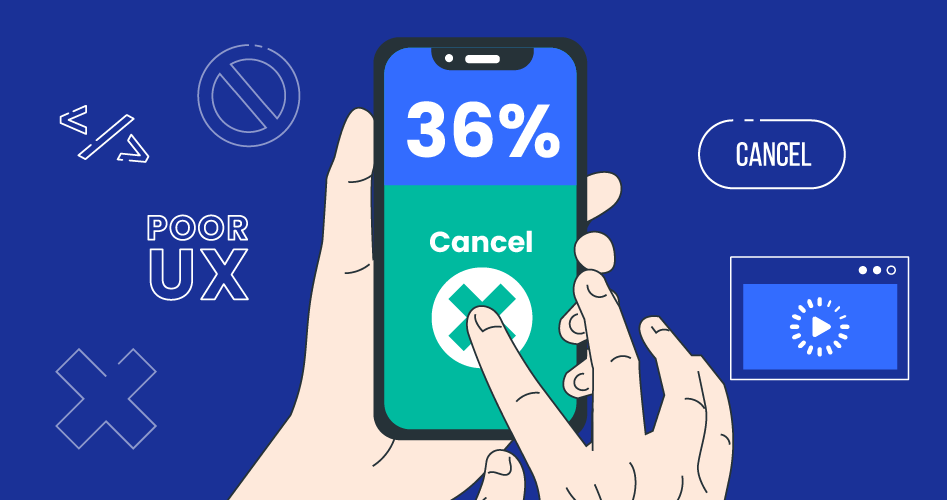
36% of viewers (43% under 25) have cancelled a TV streaming service because of poor user experiences such as playback issues, according to CTAM (Cable & Telecommunications Association for Marketing) and Hub Entertainment Research. For streaming providers, these figures highlight the importance of identifying playback errors quickly to maintain engagement and reduce churn.
Playback and quality-of-experience (QoE) data can reveal if an issue is occurring within a particular stream or service but it lacks deep device insights. With detailed device data, streaming providers can get the context needed to distinguish whether the issue is platform-wide or concentrated among particular device types, operating systems, browsers or capabilities.
Broadcasters and platforms have traditionally measured streaming success by speed, latency, and scale. However, they fail to get a full picture of viewer experiences without knowing how the content is experienced across their screens. With greatly varying device types on the market, accurate device intelligence has become a crucial data layer for delivering consistent streaming experiences at scale. When viewers have little tolerance for buffering, understanding the devices behind the affected sessions is pivotal for teams to diagnose and resolve problems effectively.The blindspot in playback analytics
Although analytics and QoE platforms provide useful information about streaming performance, they can lack visibility into the devices that are being affected. Device context can support teams to investigate why playback fails for a particular model, hardware tier or OS version. Without device context, it can be challenging to distinguish a platform-wide incident from a failure affecting a particular device cohort. This can lead to a slower diagnosis and avoidable viewer frustration, particularly for live events.
The impact on live events
Playback errors can happen both during on-demand and live content but the impact of a streaming failure is far worse during a live event. With on-demand content, viewers have the ability to pause and replay the content they’re watching. Whereas during a live broadcast, there is far less room for error; people could miss a historic moment, never to be repeated. Therefore, broadcasters have much less time to identify affected device cohorts and diagnose device-specific problems for live streaming.
FIFA reported that the World Cup 2026 reached a record-breaking 20 billion video views across its digital platforms worldwide. This level of device diversity can put strain on streaming platforms to deliver consistent experiences, particularly as unknown devices may be connecting for the first time. This popular live streaming tournament exemplifies the enormous demand for content which must be served across a wide range of devices such as phones, smart TVs, tablets, game consoles, and many other connected devices.
The cost of delayed diagnosis
Speed is essential to maintain viewer satisfaction when streaming issues occur. If audiences are consistently experiencing frequent buffering or video drops, they can abandon streaming platforms and potentially not return. It is essential for teams to understand the scale of the impact on viewers and monetization if streaming isn’t delivered smoothly.
New Relic reports that high-impact outages cost media and entertainment companies an average of $2 million per hour. It also found that these outages took 30 minutes to detect and 40 minutes to resolve. When a large outage occurs during a high-profile live event, there is a much greater likelihood of reputational damage and potential subscriber churn. With the help of a device intelligence solution, teams can reduce the duration and reach of device-related disruptions which helps protect viewer engagement and ad delivery.
The role of device intelligence
When it comes to specific device-related issues, granularity is crucial. Metrics such as failure rates or start-up time are useful but they don’t provide a thorough view of potentially affected devices. Detailed device data enables teams to resolve device-specific incidents and deliver more reliable playback.
With real-time device intelligence, streaming teams can also:
- 1. Distinguish device-specific issues from wider outages to isolate affected device cohorts and troubleshoot faster.
- 2. Identify and reduce device-specific playback errors associated with escalated playback failure rates.
- 3. Support decisions about stream variants and codecs based on known device capabilities.
- 4. Classify CTV devices accurately and identify whether a customer is streaming from a smart TV, set-top-box or gaming console to serve the right content.
A device intelligence solution like DeviceAtlas can provide precise device context to select suitable playback profiles, identify affected device cohorts, and troubleshoot failures without replacing your current stack.
Conclusion
Playback issues can have costly consequences for streaming providers, from high subscriber churn to millions of dollars lost in outages. If the root cause of these poor user experiences is device-related, deep device insights can help teams to identify and solve faster to improve playback across a fragmented device landscape. Therefore, a real-time device intelligence solution can help reduce avoidable viewing friction, subscriber cancellation, and wasted ad spend.
Heading to IBC this September 11-14? Visit us at stand 5.G60 to learn how DeviceAtlas can help you better understand the devices behind streaming traffic.
FAQ
What is device intelligence in streaming?
Device intelligence helps to identify and classify the devices that viewers use to stream. The data provided reveals the device type, OS, hardware tier, and device capabilities. It can inform streaming providers if a playback error affects one device cohort or the whole platform, which makes the problem faster to diagnose and resolve.
How can QoE (quality-of-experience) platforms miss device-specific issues?
Quality-of-experience tools track metrics like failure rates and start-up times but don't include detailed device information. Without knowing potential devices that are affected, teams are unable to identify the source of a device-related playback issue.
Why does poor playback cause more damage during live events?
During a live broadcast, viewers do not have the option to pause and replay. This means that broadcasters need to minimize errors during live streams to protect their reputation and reduce the chance of subscriber churn.
How does device intelligence reduce subscriber churn?
By knowing the precise device cohort causing a playback problem, teams can resolve device-related issues faster. If high-quality streaming returns quickly, then viewer satisfaction is restored. Less viewer frustration helps to reduce the chance of subscription cancellation due to poor playback issues.